

Mt. Blue’s Alternative Learning Program Expands Student Opportunity Through Relationship-Based and Experiential Learning
An ALP student is gains hands-on experience in plant care and propagation.
For some students, success in school begins when learning becomes more flexible, personalized, and connected to real life. At the Alternative Learning Program (ALP) located within Mt. Blue High School, alternative education teachers are working to create that environment through relationship-based instruction, project-based learning, and opportunities that extend beyond the traditional classroom.
ALP serves high school students from across RSU 9, including the communities of Chesterville, Farmington, Industry, New Sharon, New Vineyard, Starks, Temple, Vienna, Weld, and Wilton. Marian Harrison and Andrew Williams run ALP, which supports students through individualized learning pathways, community engagement, and flexible instructional approaches designed to help students reconnect with school and build confidence as learners.
“Alternative means more opportunities,” Harrison said. “We’re able to leave the confines of the classroom more often, focus on relationships, and give students more voice and choice in how they learn.”
The current model was redesigned approximately three years ago. Harrison, who has more than two decades of experience working in day treatment and alternative education settings, worked collaboratively with her school administrators to reimagine what alternative education could look like within the district, shifting toward a model centered on experiential learning, student ownership, and interdisciplinary instruction.
Harrison said the redesigned ALP model reflects a return to the relationship-centered approach that originally drew her to the work.
“We offer the same rigor,” Harrison said. “We just deliver it differently.”
Williams, who joined the program in 2024, said his path into alternative education began while working with students in both California and Maine who struggled in traditional school settings.
“I kept finding myself drawn toward helping students who needed school to look different,” Williams said.
Flexible Learning Built Around Student Voice
ALP currently serves approximately a dozen students in grades 9-12, with separate freshman and upper-class cohorts designed to meet different developmental and academic needs. Students apply to the program through an interview and referral process involving staff, families, counselors, and administrators.
Harrison and Williams said the program works best for students who want to graduate but may struggle within larger or more rigid educational settings.
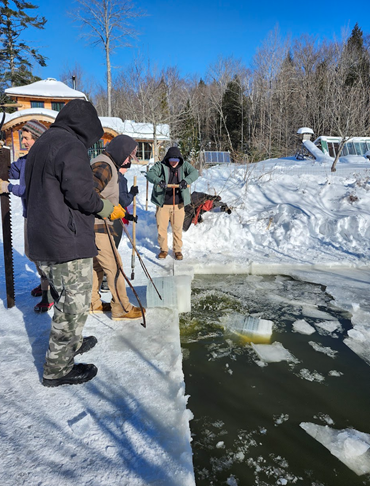
“Some students are highly independent and feel boxed in by traditional structures,” Harrison explained. “Others are quieter students who get lost in larger classrooms. The smaller environment works well for both.”
Rather than following a strictly traditional bell schedule, the program incorporates flexible pacing, project-based learning, independent work, and community experiences throughout the school day. Students help shape many aspects of instruction, including projects, themes, and demonstrations of learning.
“ALP is a more hands-on learning experience. It helped me focus and stay in school,” an ALP student said.
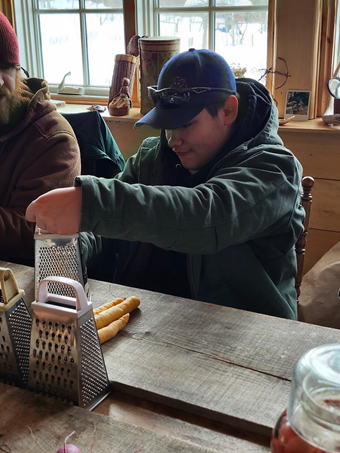
“Students are really the drivers of what we do,” Williams said. “We build the standards into projects and experiences that connect to their interests.”
That flexibility allows students multiple ways to demonstrate mastery of academic standards. During a recent Maine history unit, for example, students created original board games featuring historical themes, geography, industries, and vocabulary tied to the curriculum.
“ALP is flexible when it comes to work and when it needs to be done. This fits my learning style, which is how I learn best,” an ALP student said.
“The standards stay the same,” Harrison said. “The pathway to demonstrate learning can look different.”
The program also integrates cross-curricular learning whenever possible. Students participating in hunting trips, firefighting training through the Foster Career and Technical Education (CTE) Center (the region’s CTE school), or community projects may document and reflect on those experiences through writing, science observations, or history connections that count toward coursework.
“English doesn’t live in a vacuum,” Williams said. “If a student is having meaningful experiences outside the classroom, we can often connect that back to academic learning.”
Learning Beyond the Classroom
Experiential learning is embedded throughout the program and frequently takes students into the community.
Through “Adventure Fridays,” students help plan and participate in off-campus learning experiences focused on environmental education, service work, and life skills. Recent activities have included stacking wood for community members, exploring local outdoor spaces, and practicing communication skills through interactions with unfamiliar community members.
“We’re teaching social skills and problem-solving while also building relationships and helping students connect with their community,” Harrison said.
Students also participate in greenhouse and aquaponics projects within the school, including raising tilapia and growing seedlings for both school and community gardens. Freshmen participate in a long-term “Mission to Mars” project that combines environmental science, inquiry-based learning, food systems, and engineering through work in the school’s greenhouse and hoop house.
Freshmen ALP students nurture both plants and knowledge as they learn about plant growth and care for the greenhouse, an important component of the ALP experience.
“We can spend time really elaborating on projects in a way that’s harder to do in a traditional classroom,” Harrison said.
Community partnerships also extend learning opportunities. Students assist with environmental cleanups, community gardens, and leadership activities throughout the school building. Recently, ALP students helped facilitate activities for the school’s unified program after being asked to step into leadership roles.
“They stepped up immediately,” Williams said. “When students feel trusted and valued, they often surprise themselves.”
Relationships and Restorative Support
Relationships and restorative practices are central to the program’s structure and culture. Students have access to district social workers and school-based support services, while Harrison and Williams prioritize communication, accountability, and relationship-building throughout the day.
“A lot of our work is helping students rebuild confidence in themselves as learners,” Harrison said.
“The teachers of ALP are easy to talk to and are my reason for coming to school every day,” an ALP student said.
ALP staff maintain ongoing communication with families through phone calls, meetings, and individualized planning.
“We’re all trying to make this work together,” Harrison said. “It has to be collaborative.”
The district’s support for the program has also been critical to its growth, according to Harrison and Williams. Leadership within RSU 9 has supported the program’s flexibility and encouraged innovative approaches to instruction and student engagement.
“Alternative educational opportunities are a much-deserved opportunity for some of our students who need alternative settings and learning ideas from their educators and school. It is about what learning can be about for them,” RSU 9 Superintendent Christian Elkington said. “Under the guidance of Ms. Harrison and Mr. Williams, students are given the opportunity to think, ‘What if we tried it this way?’ or, ‘What if we learned this standard through…?’ A true collaborative, shared, family spirit is alive, thanks to our students and staff.”
Building Real-World Skills
Although the environment is intentionally flexible, Harrison and Williams emphasized that expectations remain high. Students are expected to participate actively, manage responsibilities, collaborate with peers, and contribute to the learning community. Many projects emphasize workplace readiness, communication, budgeting, and problem-solving skills.
One real-world example is the student-run school store, which helps fund many of the program’s projects and field experiences. Students manage inventory, pricing, budgeting, and federal nutrition compliance requirements while learning business and financial skills.
“We do not have a dedicated budget,” Harrison said. “So, students help run the store, and that gives us opportunities to fund projects and experiences ourselves.”
Educators say students are often surprised by the level of responsibility expected within the program.
“A lot of students come in thinking alternative education will be easier,” Williams said. “Then they realize we actually work really hard here.”
As schools across Maine continue exploring student-centered, flexible learning models, programs like ALP demonstrate how alternative education can provide students with rigorous academics, meaningful relationships, and opportunities to engage in learning in ways that feel relevant and authentic.
“Without ALP, I would have dropped out,” an ALP student said.
“The energy in alternative education is different,” Harrison said.
Related
Legal Disclaimer:
EIN Presswire provides this news content "as is" without warranty of any kind. We do not accept any responsibility or liability for the accuracy, content, images, videos, licenses, completeness, legality, or reliability of the information contained in this article. If you have any complaints or copyright issues related to this article, kindly contact the author above.
