

The First Unified “Map of Behavior” Arrives on America’s 250th Birthday — Offers Basic Behavioral Literacy to the People
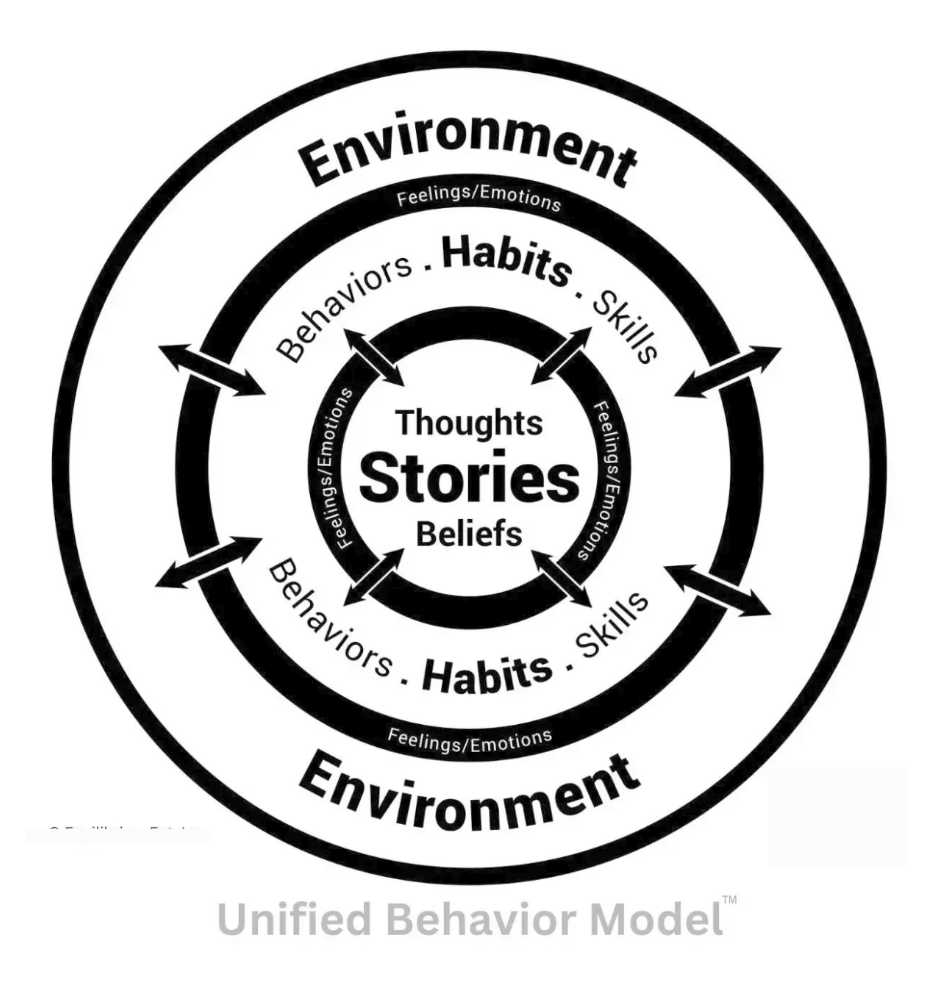
The Behavior Echo-System: The Unified Behavior Model's complete, foundational map revealing exactly how human behavior is influenced in the moment, and how habits and skills are shaped over time.
150 years in the making, UBM survives a 1-year global adversarial challenge by top scientists and LLMs to introduce basic behavioral literacy—the "4th R".
As America celebrates its 250th birthday, the Unified Behavior Model marks the expiration of its “No Fifth Element” Challenge — an open, falsifiable test for a field long described as “soft.”
For nearly 150 years, behavioral science has operated without a basic map detailing an individual’s full behavioral spectrum — what influences behavior in the moment and shapes it over time.
That changes this week.
In 1969, then-APA President George Miller issued his now-famous mandate: “Give psychology away to the people who need it most.” Half a century later, it remains largely unfulfilled.
The National Institute of Mental Health (NIMH) convened a week-long consortium of top theorists in 1991, its goal: to produce a unified framework. Unfortunately, the effort concluded with “no consensus reached.”
Not a Therapy: The First Complete, Elemental, Falsifiable Map of Human Behavior
Common sense suggests that education, in the form of basic behavioral literacy, ought to arrive first.
Millions of parents watch their teens struggle with discipline, habits, anxiety, and motivation. Therapists and researchers possess deep knowledge, yet the expertise remains largely trapped behind university labs and clinician offices — available only after behavioral challenges arise.
“If the experts haven’t been able to agree on an elemental map — and they haven’t — how are fifteen-year-old Bobby and fourteen-year-old Jane supposed to navigate?” asks Martin Grunburg, who insists UBM was “unearthed,” not created. “Why should a teenager wait until something feels broken?”
“Teaching professional coaches and executives is rewarding,” Grunburg said. “Passing UBM down — to future generations — is why it's here.”
Adult students describe UBM as “empowering,” “calming,” and one that makes “goals and behavior change less intimidating.” Miles, a 22-year-old former college dropout who re-enrolled, shared on social media: “I began taking greater accountability. UBM taught me about goal-directed behavior and the process to track habits to bridge the gap.”
The Behavior Echo-System
UBM does more than identify the four elements of behavior: Cognition/Stories, Behaviors/Habits/Skills, Emotions & Feelings, and Environment (which includes one’s body). It reveals how they dynamically interrelate to form one's “Behavior Echo-System.”
The term is deliberate: it's “echo-system,” not “ecosystem.” Two people can share an ecosystem — a stadium, a classroom — but never the same “Behavior Echo-System.” Each person’s experiences, stories, biology, DNA, emotions, and behaviors are theirs alone.
Embodied Environment: Behavior Is Separate — and Attached
Critics argue the concept was crafted to validate itself. Grunburg presents the exact opposite logic.
“Embodied environment, for a model of behavior — not a person’s body/biology — is accurate. Behaviorally speaking, a honking horn and a toothache each may alter how I think, feel, and behave — each is a stimulus.”
“It turns out, one’s body is the car they can never exit,” Grunburg said. “Our body is the behavioral steering mechanism.”
Common Sense and the 4th “R”
For nearly two hundred years, Reading, wRiting, and aRithmetic have been the academic staples — the three Rs.
Two hundred years ago, the environment shaping young people’s behavior was substantially different. Electricity wasn’t widely available. No algorithms, smartphones, or AI.
“Maps cannot guarantee a safe arrival, yet they are used daily by millions because they reduce guesswork, save time and energy, and reveal the path,” says Grunburg.
The Experts Weigh In on UBM
Steven Hayes, creator of Acceptance and Commitment Therapy (ACT), and behavioral economist Dan Ariely each extended well-wishes but did not engage. One prominent unification theorist, Dr. Gregg Henriques — a longtime advocate for coherence in psychology — engaged substantively.
"I'm grateful to Dr. Henriques," Grunburg said. "He demonstrated sincere concern for coherence and utility and exchanged thoughtful ideas — even proposed 'perception' as a fifth behavioral element. UBM's partitions and rigor survived the challenge."
TGIF — The Grunburg Initiative Foundation
Ten thousand scientists notified. Thousands of downloads. A full year. If scientists love one thing, it’s critiquing models — certainly "unified" claims.
Days from expiration, TGIF — The Grunburg Initiative Foundation officially kicks off. It was prudent to wait. We did. No "Black Swan." Now, the public wins.
TGIF invites inquiries from mission-aligned nonprofits whose vision is to empower youth. Direct all inquiries to the contact within.
Gretchen Grunburg
Equilibrium Enterprises, Inc.
email us here
Visit us on social media:
X
Watch: The 'Periodic Table' of Human Behavior & The 4 Levers of the UBM.
Legal Disclaimer:
EIN Presswire provides this news content "as is" without warranty of any kind. We do not accept any responsibility or liability for the accuracy, content, images, videos, licenses, completeness, legality, or reliability of the information contained in this article. If you have any complaints or copyright issues related to this article, kindly contact the author above.
